



stahlkalt walzwerkprozess
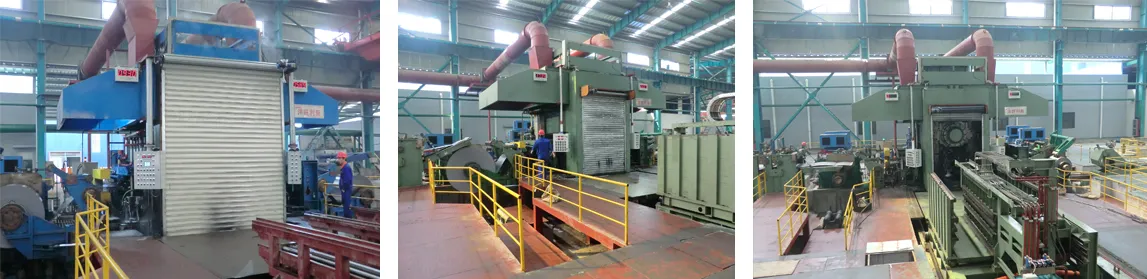
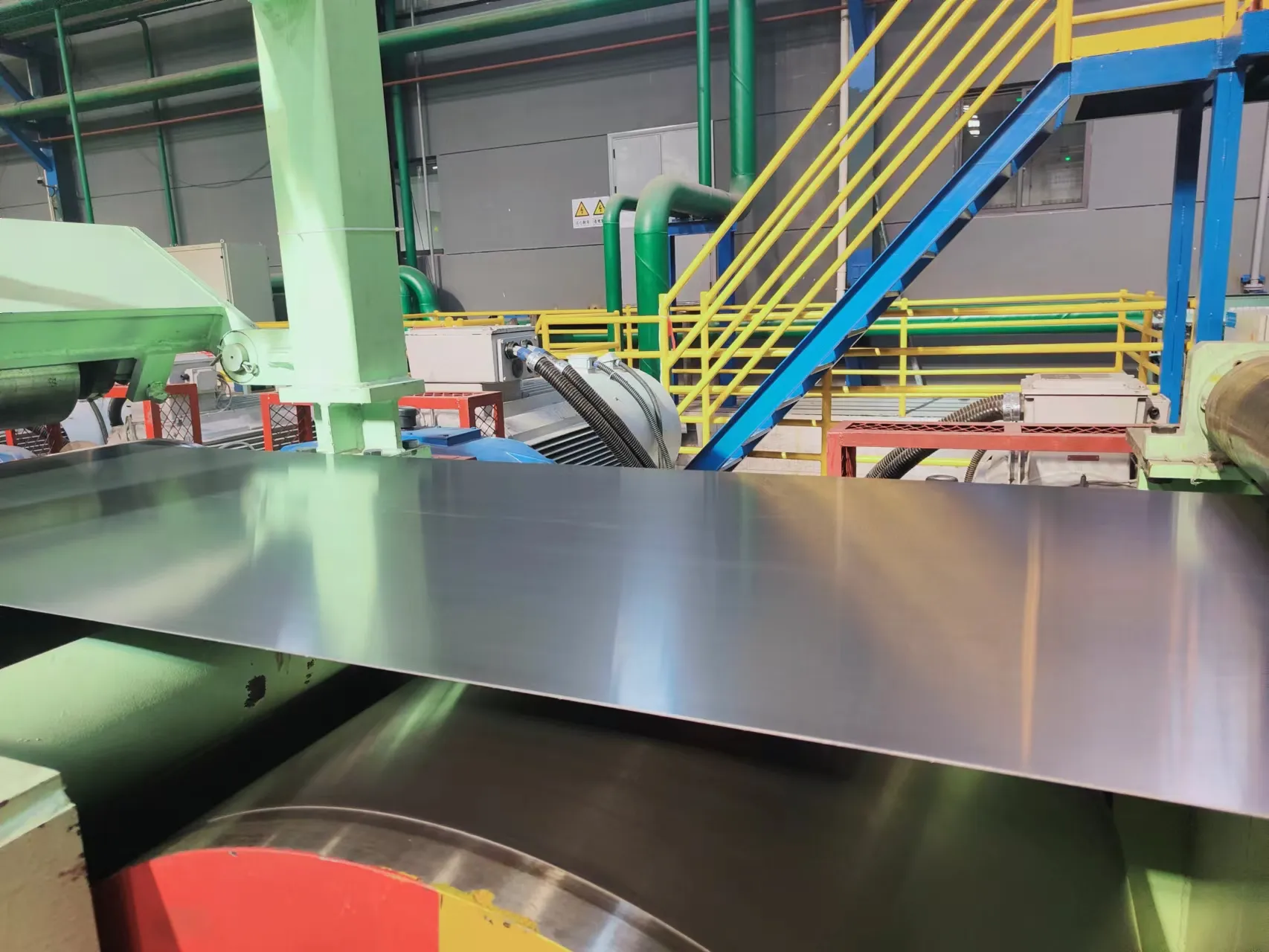
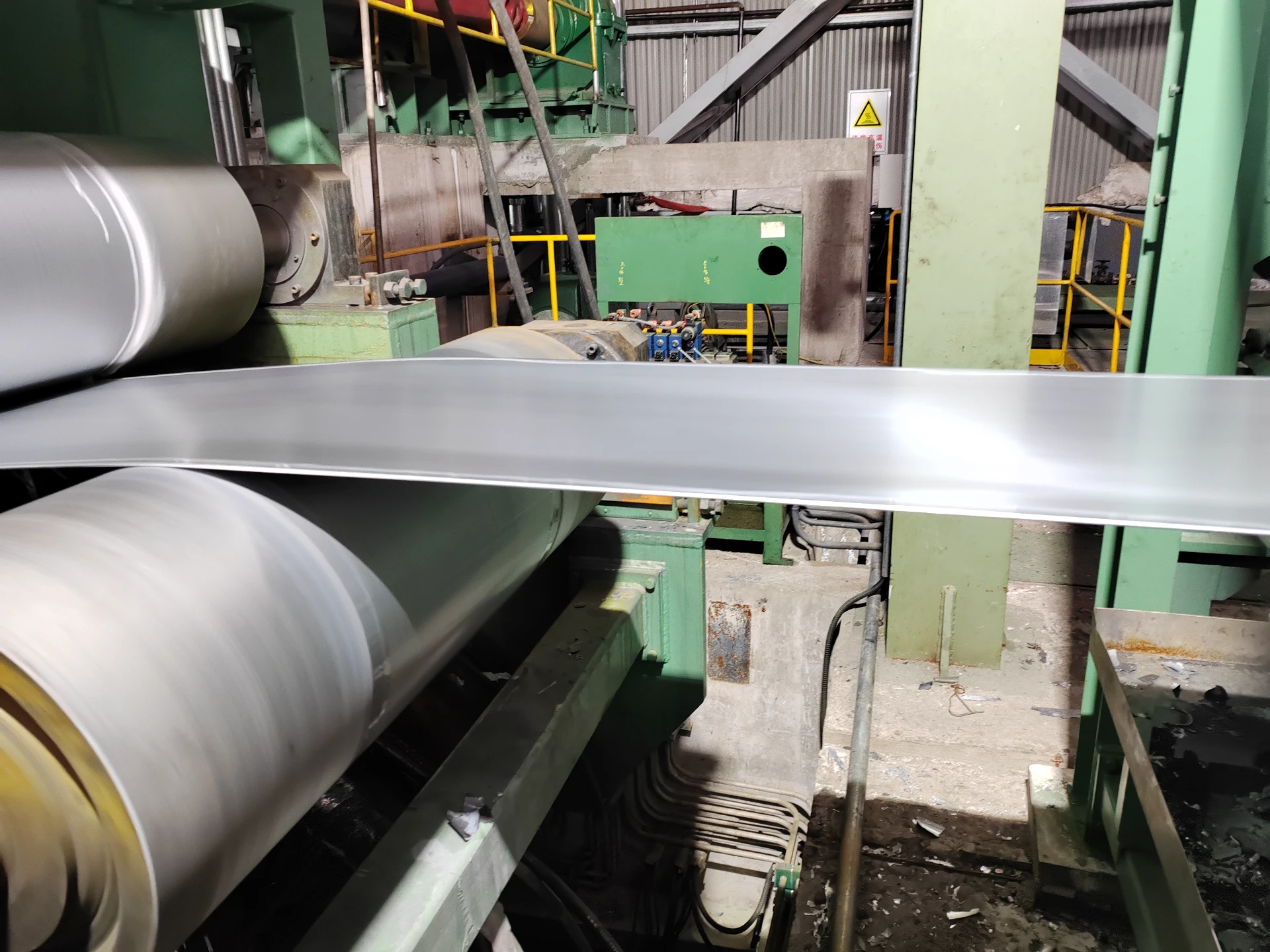
/The temper mill process is an essential finishing operation in steel manufacturing, particularly for improving the flatness and surface quality of steel plates. A high precise temper mill applies controlled cold rolling to eliminate imperfections, enhance mechanical properties, and ensure dimensional accuracy. This process is especially crucial for construction steel, automotive panels, and precision engineering applications where surface integrity and flatness are paramount. A high-quality temper rolling mill refines the steel’s microstructure, removes yield point elongation, and enhances formability while maintaining strength. Unlike heavy cold rolling, temper rolling involves minimal reduction (typically 0.5% to 5%) to avoid excessive hardening. The temper pass mill and soft rolling mill techniques further optimize the process for different steel grades, ensuring superior flatness and surface finish. The Importance of Flatness in Steel Plates and the Role of the Temper Mill Flatness is a critical quality parameter for steel plates, as warping or uneven surfaces can lead to assembly issues, poor weldability, and reduced structural integrity. The temper mill process corrects flatness deviations by applying uniform pressure across the steel strip, eliminating residual stresses from prior hot or cold rolling stages. A high precise temper mill achieves this by using precision-ground rolls and advanced tension control systems. The mill applies slight elongation to the steel, redistributing internal stresses and ensuring a uniformly flat product. Additionally, a high-quality temper rolling mill incorporates closed-loop feedback systems to monitor flatness in real time, making instantaneous adjustments to rolling force and tension. The temper pass mill is particularly effective for high-strength steels, where maintaining flatness without over-hardening is challenging. Meanwhile, a soft rolling mill approach is used for low-carbon steels, where excessive work hardening must be avoided to preserve ductility. Enhancing Surface Quality Through the Temper Mill Process Surface defects such as scratches, roll marks, and oxide residues can compromise the performance of steel plates in critical applications. The temper mill process refines the surface by: Removing Scale and Oxide Layers – Light rolling breaks up and smoothens surface oxides, improving paint adhesion and corrosion resistance. Eliminating Luders Bands – These strain lines, caused by discontinuous yielding, are removed through controlled deformation in a high precise temper mill . Reducing Microstructural Irregularities – The process refines grain structure, enhancing both aesthetic and functional surface properties. A high-quality temper rolling mill employs polished work rolls and optimized lubrication to prevent secondary defects such as scratches or imprints. The temper pass mill also ensures uniform surface texture, which is crucial for applications requiring consistent friction or coating adherence. Key Operational Parameters in a High Precise Temper Mill To maximize flatness and surface quality, several critical parameters must be controlled during the temper mill process: Rolling Force and Reduction Rate – Excessive force can induce new stresses, while insufficient reduction may not fully correct flatness. A high precise temper mill dynamically adjusts these parameters based on real-time thickness measurements. Roll Surface Finish – The rolls must be meticulously maintained to avoid transferring defects to the steel. Electrostatic polishing and laser texturing are often used in a high-quality temper rolling mill . Tension Control – Proper tension prevents buckling or stretching, ensuring uniform elongation across the plate width. Lubrication and Cooling – Effective lubrication minimizes friction-induced defects, while controlled cooling prevents thermal distortion. Advanced temper pass mill systems integrate AI-driven predictive models to optimize these parameters, ensuring consistent quality across different steel grades and thicknesses. The Role of Soft Rolling Mill Techniques in Delicate Steel Processing For ultra-thin or highly ductile steel plates, excessive cold work can lead to cracking or loss of formability. A soft rolling mill applies minimal reduction with precise tension control, ensuring flatness without compromising material properties. This technique is particularly beneficial for: Low-Carbon Steels – Where excessive hardening must be avoided. Stainless Steel Plates – Which require a balance between surface smoothness and retained ductility. Precision-Grade Steel – Used in electronics and aerospace, where micro-surface defects are unacceptable. By combining soft rolling mill strategies with a high precise temper mill , manufacturers can achieve superior flatness and surface quality even for the most demanding applications. Advanced Technologies in Modern Temper Pass Mill Systems Recent advancements in temper mill technology have significantly improved flatness and surface quality control: Laser-Based Flatness Detection – Real-time laser scanners measure plate flatness, allowing instant corrections in rolling pressure. Adaptive Roll Gap Control – Hydraulic systems adjust roll gaps dynamically to compensate for thickness variations. Predictive Maintenance for Rolls – AI algorithms predict roll wear, ensuring consistent surface finish over prolonged production runs. These innovations make the high-quality temper rolling mill more efficient and reliable, reducing scrap rates and improving productivity. Optimizing Steel Plate Quality with Precision Temper Rolling The temper mill process remains indispensable for achieving high flatness and superior surface quality in steel plates. By leveraging a high precise temper mill , manufacturers can eliminate defects, enhance mechanical properties, and meet stringent industry standards. The integration of temper pass mill and soft rolling mill techniques further expands processing capabilities, ensuring optimal results for diverse steel grades. Future developments in automation, AI-driven process control, and advanced roll materials will continue to refine temper mill efficiency. As steel applications become more demanding, the role of the high-quality temper rolling mill will only grow in importance, solidifying its place as a cornerstone of modern steel manufacturing. By adopting these best practices and technologies, steel producers can deliver plates with unmatched flatness and surface integrity, meeting the evolving needs of construction, automotive, and precision engineering industries.

We have successfully executed over 500
projects around the world,
many first-of-their-kind
research projects and products in China, including
We have successfully executed over 500
projects around the world,
many first-of-their-kind
research projects and products in China, including
-
2004
The 1st hydraulic AGC system for hot rolling of ribbon steel
-
2006
The 1st AFC system used for 1450mm skin pass mill
-
2009
The 1st 5-stand tandem line with 2-stand POR & Uncoiler for 650mm ribbon steel
-
2012
The 1st reversing mill for 1380mm strip
-
2016
The 1st soft-rolling system used in skin pass mill
-
2019
The 1st fully automated medium-width tandem cold rolling mill
-
2021
The 1st 5000KN Twin-stand double skin pass mill
-
2022
The 1st coupled pickling line & tandem cold mill with two modes - big roller & small roller
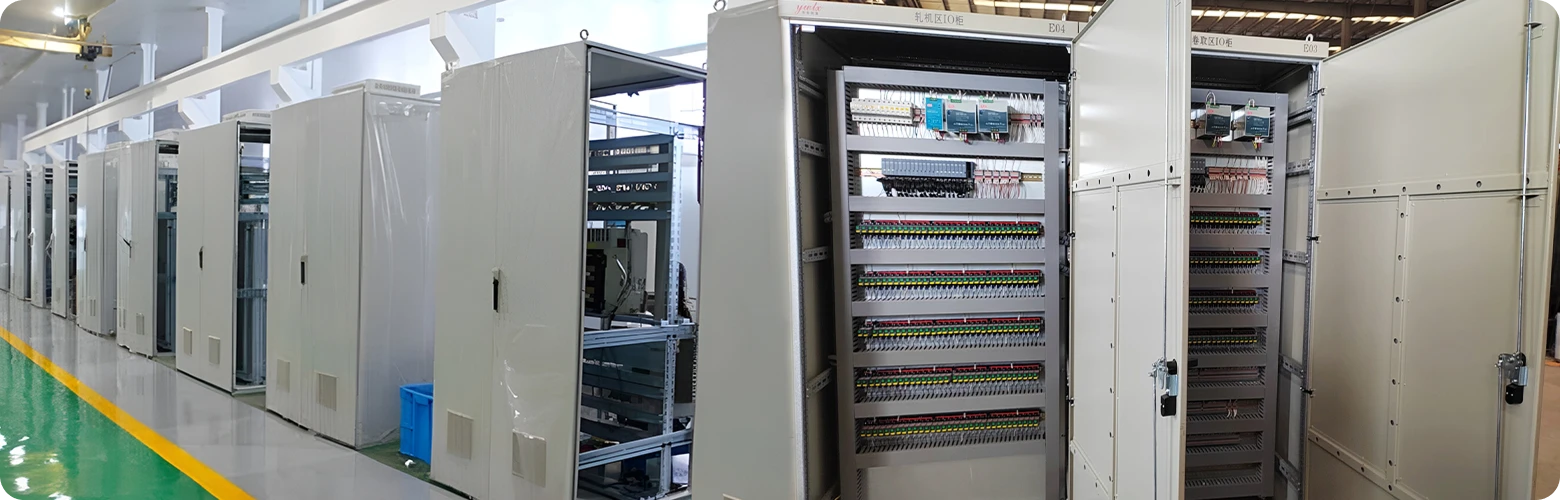
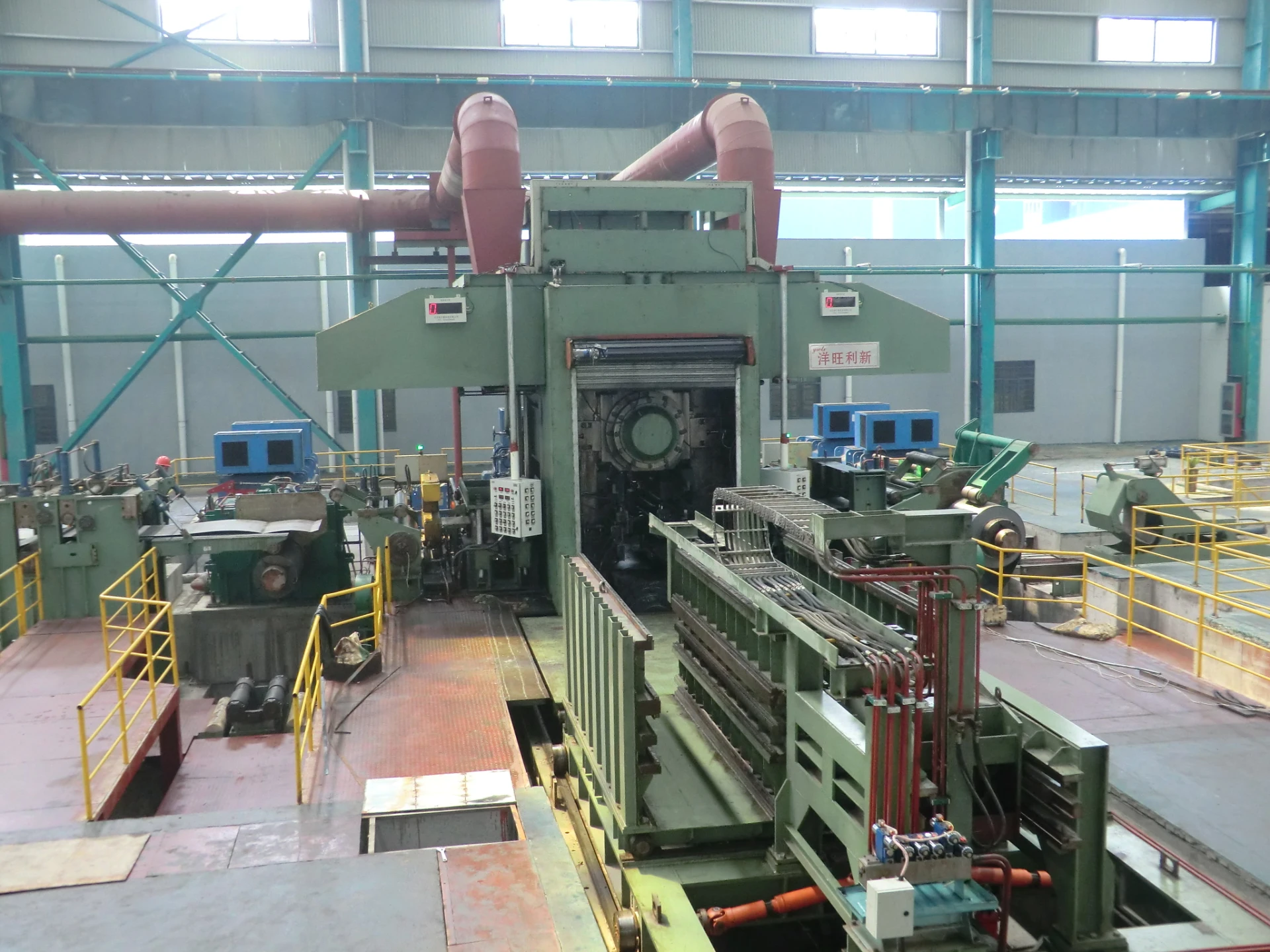
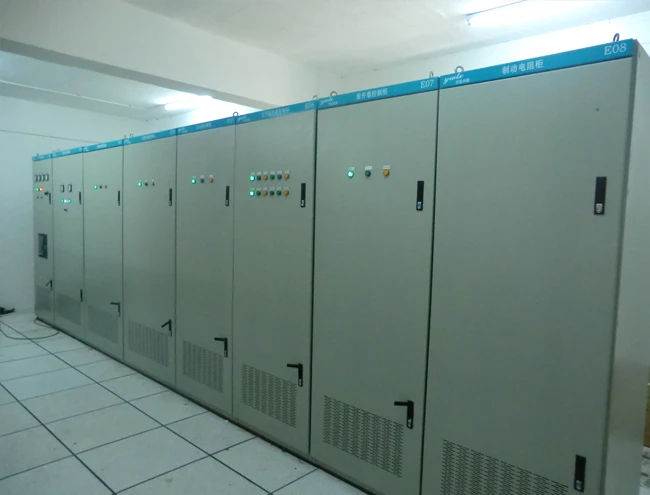

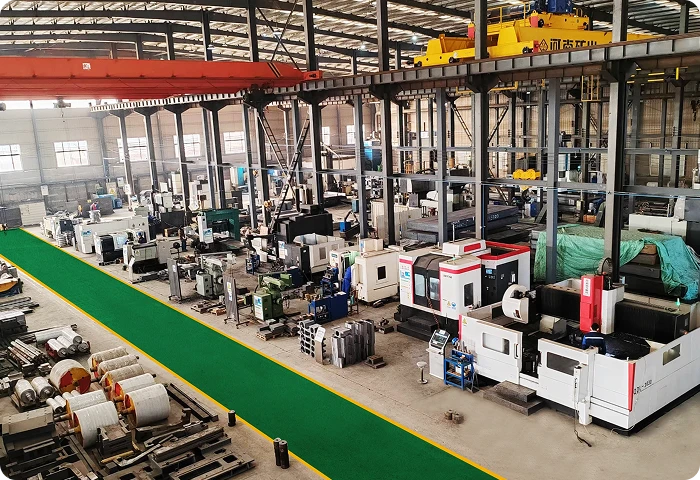
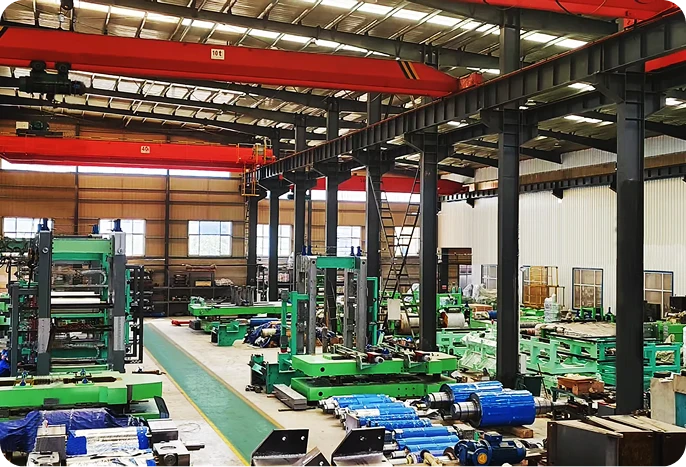
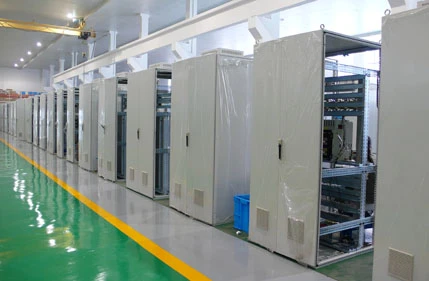
Yang Wang Li Xin operates a state-of-the-art facility over 66,000 square meters,and our manufacturing facility is fully equipped with high-tech machinery and high-capacity cranes. This enables us to handle large work pieces measuring 4.5m in width, 10m in length, and 1.5m in height, guaranteeing our capacity to produce 1800mm skin-pass mills and 1450mm rolling mills. The individual piece can weigh up to 100 tons.


Quality is fundamental to the enterprise survival. We have established a comprehensive and meticulous quality management system and have successfully obtained ISO14000 certification. Starting from the design source, it supervises the entire production cycle, including design, procurement, processing, assembly, in-factory testing, installation, and online commissioning. The workshop is equipped with measuring tools like vernier calipers, spectrometers, hardness testers, and ultrasonic flaw detectors. They are used to check materials and control tolerances to ensure the final equipment meets or exceeds requirements. All products have a unique code, This enables the easy identification and traceability of the equipment components and ensures full control of quality.


-
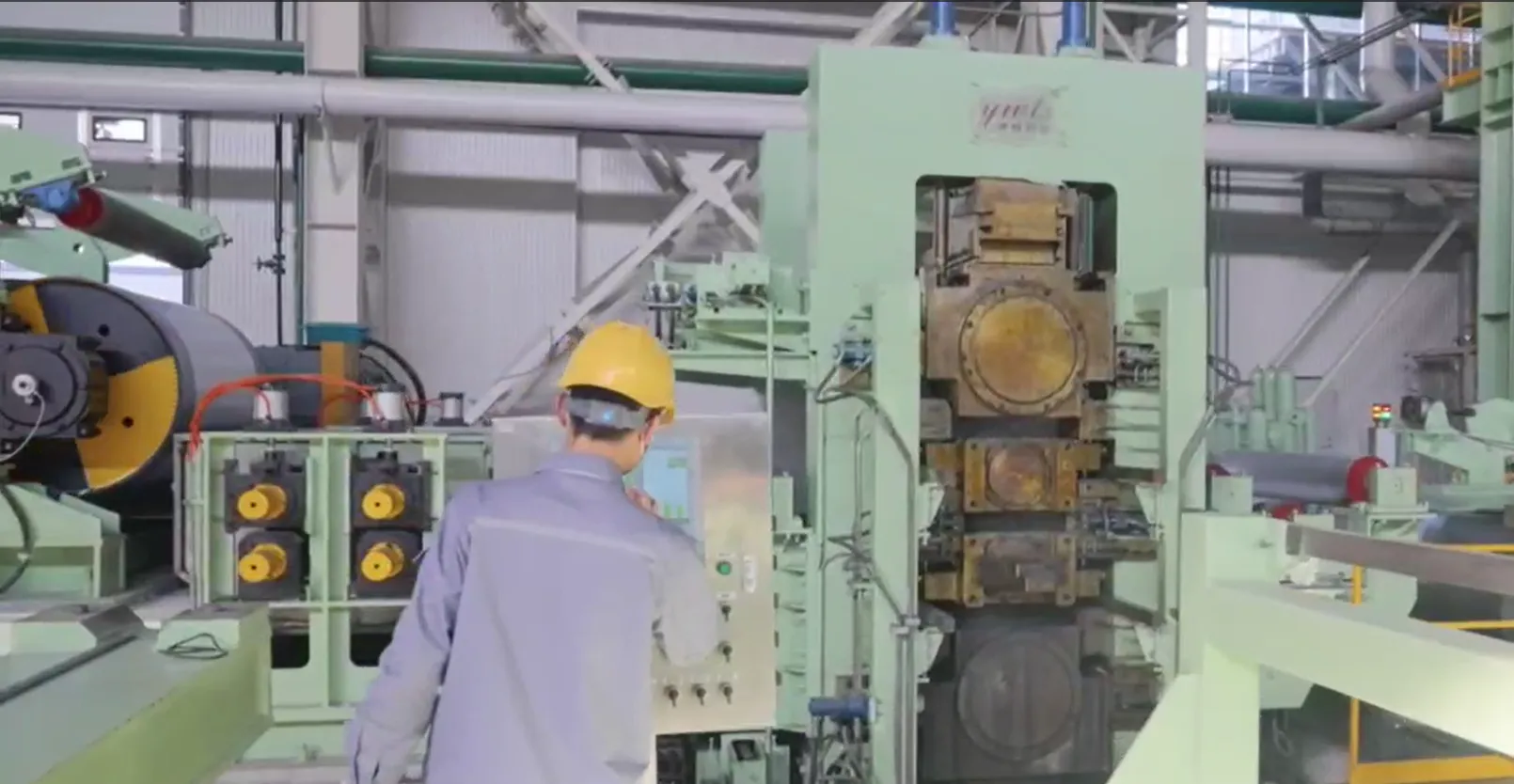 Cladding Rolling Mill - Beijing Yang Wang Li Xin Sci&Tech Co., Ltd.|High-Quality Metal Cladding, Energy EfficiencyCladding Rolling Mill is a cutting-edge solution designed to meet the evolving demands of the metal cladding industry. Developed by Beijing Yang Wang Li Xin Sci&Tech Co., Ltd. , this technology offers superior surface quality, energy efficiency, and cost-effective production. This article explores the product's features, advantages, technical specifications, and applications, while highlighting th
 -
 Automated Packaging Machine | Fast, Precise, Cost-Savingautomated packaging machine is a key solution in the manufacturing industry, specifically within Special Equipment Manufacturing Industry and Manufacturing of metallurgical specialized equipment. This article explores how Beijing Yang Wang Li Xin Sci&Tech Co.,Ltd. supports professionals with durable, high-performance products, and explains why this product is an ideal choice for businesses in the
 -
 Reversible Cold Rolling Technology in Stainless Steel ProductionThe fundamental working principle of a reversible cold rolling mill involves passing the strip back and forth between the work rolls, with each pass applying controlled reduction. Between passes, the strip is wound onto recoilers at both ends of the mill stand, allowing for continuous processing without the need for multiple stands. This configuration provides exceptional flexibility in scheduling


